Mercedes-Benz Summer Tire Guide: The Best Summer Tires for Every Mercedes-Benz and AMG Vehicle

Mercedes-Benz Summer Tire Guide: The Best Summer Tires for Every Mercedes-Benz and AMG Vehicle

As spring arrives and temperatures rise, Mercedes-Benz owners are starting to think about switching from winter to summer tires. While winter tires provide optimal grip in cold and icy conditions, they can negatively impact performance, handling, and fuel efficiency once the weather warms up. That’s why installing the right summer tires is crucial for maintaining the driving dynamics, safety, and comfort that define every Mercedes-Benz and Mercedes-AMG vehicle.

However, not all summer tires are created equal. The ideal tire depends on the specific model, driving habits, and performance needs of the vehicle. A Mercedes-AMG sports car requires a different type of summer tire than a luxury SUV used for long-distance road trips or towing. Similarly, an electric Mercedes-Benz has unique tire considerations due to its weight, range, and efficiency requirements.

This guide will help Mercedes-Benz owners choose the best summer tires based on their vehicle type, recognize the signs of worn-out tires, and determine the right time to make the seasonal switch.

Maintain Your Grip

As temperatures rise above 7°C, it’s important to switch from winter tires to all-season or summer tires to ensure safer driving and preserve tire tread. Schedule your appointment today to stay ready for the seasonal change.

Browse Tires Specials

Choosing the Right Summer Tires for Your Mercedes-Benz or Mercedes-AMG


The right summer tires enhance traction, cornering stability, braking performance, and overall handling. Depending on the model and driving style, Mercedes-Benz owners should consider specific tire characteristics that best suit their vehicle.

Mercedes-Benz SUVs: Luxury, Comfort, and Capability

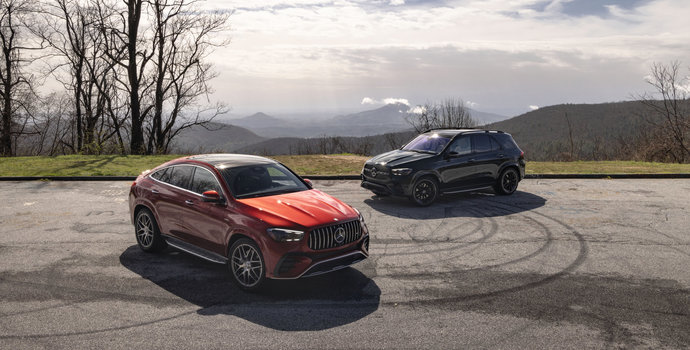
Owners of Mercedes-Benz SUVs, such as the GLC, GLE, and GLS, require summer tires that balance comfort, durability, and all-weather performance. For those who use their SUV for long road trips or family travel, touring-oriented summer tires offer a smooth and quiet ride with excellent wet and dry grip.

For SUVs that handle towing duties, such as the Mercedes-Benz GLE or GLS with trailer packages, tires with reinforced sidewalls and higher load ratings are ideal. These tires provide additional stability when pulling a trailer or carrying extra cargo. The Mercedes-Benz G-Class, a capable off-road luxury SUV, benefits from all-terrain summer tires that can handle gravel roads and uneven terrain while maintaining on-road refinement.

Mercedes-AMG Performance Vehicles: Maximum Grip and Precision Handling

For Mercedes-AMG performance sedans, coupes, and roadsters, such as the AMG C 63, AMG E 53, and AMG GT, high-performance summer tires are essential. These models demand maximum grip, stiff sidewalls for precise cornering, and enhanced heat resistance to maintain performance during aggressive driving.

Ultra-high-performance (UHP) summer tires feature asymmetric tread patterns, specialized rubber compounds, and wider contact patches, ensuring superior road grip and shorter braking distances at high speeds. Some models, like the AMG GT Black Series, may come equipped with track-focused tires, offering extreme grip but with a reduced lifespan compared to conventional summer tires.

Mercedes-Benz Electric Vehicles: Efficiency and Low Rolling Resistance

Mercedes-Benz EVs, such as the EQE and EQS sedans or the EQB and EQS SUVs, require summer tires that support increased weight due to battery packs while minimizing rolling resistance to preserve driving range.

Tires designed for EVs often feature reinforced sidewalls to handle additional weight, specialized rubber compounds for lower rolling resistance, and noise-reducing technology to complement the near-silent operation of an electric powertrain. Choosing Mercedes-Benz-approved EV-specific summer tires ensures optimal performance, longevity, and range efficiency.

How to Tell If You Need New Summer Tires


Even if you already own a set of summer tires, it’s important to assess their condition before reinstalling them for the season. Worn-out or damaged tires compromise safety and performance, so a thorough inspection is essential.

  • Tread Depth: The legal minimum tread depth is 1.6 mm, but summer tires should be replaced when they reach 3 mm to maintain proper wet-weather grip. Using a tread depth gauge or the "toonie test" can help determine if the tires have sufficient tread.
  • Uneven Wear Patterns: If some areas of the tread are more worn than others, it could indicate alignment or suspension issues. This can negatively impact handling and safety.
  • Cracks or Bulges: Exposure to heat, UV rays, and road debris can cause the rubber to degrade over time. Cracks or bulges on the sidewalls indicate the tire is weakened and at risk of failure.
  • Vibration or Noise: If the vehicle vibrates excessively at highway speeds or produces unusual road noise, the tires may be out of balance, worn unevenly, or structurally compromised.
  • Age of the Tires: Even if a tire has adequate tread depth, rubber compounds deteriorate with age. Most manufacturers recommend replacing summer tires after six years, even if they haven’t reached their wear limit.

When to Install Summer Tires on Your Mercedes-Benz

Timing is crucial when switching to summer tires. Installing them too early—when temperatures are still cold—can cause premature wear and reduced grip. Keeping winter tires on for too long, on the other hand, leads to excessive tread wear and reduced fuel efficiency.

A general rule is to switch to summer tires when daily temperatures consistently stay above 7°C. This is the threshold at which winter tires begin to lose effectiveness, and summer tires start performing optimally.

In most regions, this transition period occurs in mid to late spring. Booking a tire change appointment in advance ensures availability, as many drivers schedule their seasonal tire swap at the same time.

Understanding Tire Markings and Codes


Every tire has alphanumeric codes on its sidewall that provide crucial information about its size, performance, and manufacturing details. Understanding these markings can help owners select the correct replacement tires for their Mercedes-Benz.

  • Tire Size (Example: 255/40R19)
    • 255: Tire width in millimetres
    • 40: Aspect ratio (height of the sidewall as a percentage of the width)
    • R19: Radial construction and 19-inch wheel diameter
  • Load Index & Speed Rating (Example: 96Y)
    • 96: Load index (maximum weight the tire can support)
    • Y: Speed rating (maximum speed capability)
  • DOT Code (Example: DOT XYZ 2423)
    • 2423: Indicates the tire was manufactured in the 24th week of 2023
  • Treadwear, Traction, and Temperature Ratings (Example: 300 AA A)
    • 300: Treadwear rating (higher number = longer lifespan)
    • AA: Traction rating (AA, A, B, C – higher is better)
    • A: Temperature resistance rating (A, B, C – higher is better)
  • M+S and 3PMSF Symbols
    • M+S (Mud and Snow): Indicates an all-season tire
    • 3PMSF (Three-Peak Mountain Snowflake): Winter-rated tire

For Mercedes-Benz vehicles, always ensure the tires meet the manufacturer’s OEM (Original Equipment Manufacturer) specifications for optimal performance and safety.

Conclusion

Switching to the right summer tires ensures that your Mercedes-Benz or AMG vehicle performs at its best, delivering superior handling, braking, and ride comfort. Whether you drive an SUV for family trips, a high-performance AMG model for exhilarating drives, or an electric Mercedes-Benz for efficiency, selecting the right summer tires tailored to your needs is essential.

By knowing when to install summer tires, how to assess their condition, and how to read tire markings, Mercedes-Benz owners can make informed decisions that enhance safety and driving pleasure throughout the warmer months. Planning ahead for the seasonal tire change ensures a smooth transition to summer driving while maximizing the lifespan of the tires and maintaining the world-class performance expected from a Mercedes-Benz.


You might also be interested in these blogs:

2025 Mercedes-Benz Sprinter Cargo Van 2500

2025 Mercedes-Benz Sprinter Cargo Van 2500
plus

Photo for illustrative purposes only.

More Details link-icon

Other Articles That May Interest You

The True Cost of Power: How Your GLC Powertrain Choice Affects Your Daily Fuel Budget
plus

The True Cost of Power: How Your GLC Powertrain Choice Affects Your Daily Fuel Budget

Choosing a Mercedes-Benz GLC in Brampton means deciding between efficiency, versatility, and pure performance. But beyond the showroom appeal of turbocharged engines and electrified powertrains lies a practical question every driver must answer: What will this vehicle actually cost me to fuel every day? The 2026 GLC lineup offers four distinct powertrain personalities—from the fuel-conscious...

Read more link-icon
Your Questions About the 2026 Mercedes-Benz CLA Answered
plus

Your Questions About the 2026 Mercedes-Benz CLA Answered

The 2026 Mercedes-Benz CLA is the first model in an entirely new vehicle family. This all-electric sedan uses an 800-volt architecture inspired by the VISION EQXX concept, delivering up to 792 km of range, 320 kW DC fast charging, and Mercedes-Benz's new MB.OS operating system. For drivers in Brampton and across Ontario, the CLA offers two powertrain options: the rear-wheel-drive CLA 250+ and...

Read more link-icon
All-New 2026 Mercedes-AMG E53 Wagon: Hybrid Performance with More Versatility
plus

All-New 2026 Mercedes-AMG E53 Wagon: Hybrid Performance with More Versatility

For performance enthusiasts and families across Ontario who refuse to choose between thrilling acceleration and everyday versatility, the 2026 Mercedes-AMG E 53 HYBRID 4MATIC+ Wagon delivers both. This marks the first performance hybrid wagon from Mercedes-AMG available in Canada, bringing plug-in hybrid technology to the wagon segment with 604 hp, all-electric driving capability, and the cargo...

Read more link-icon